What is RuView?
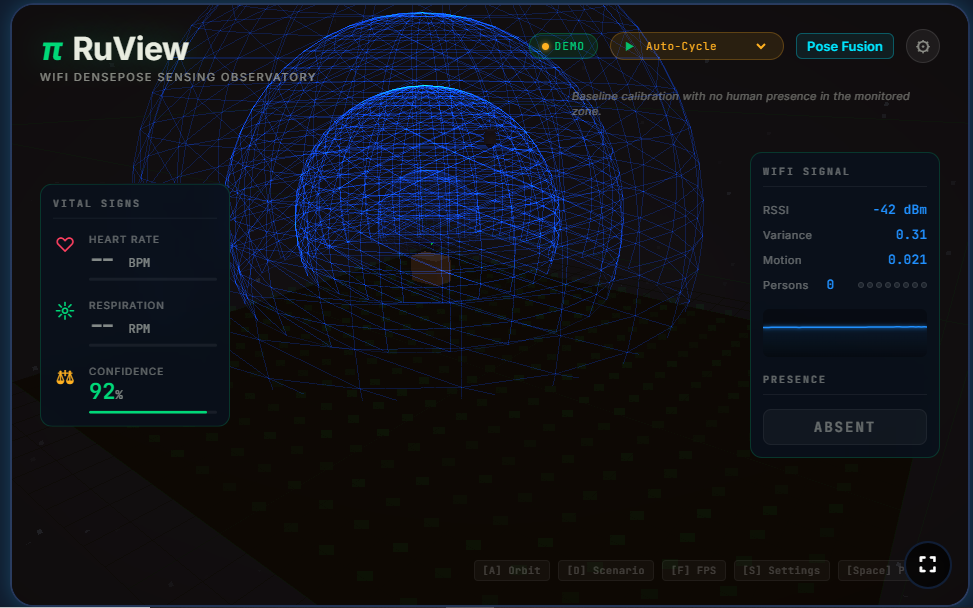
Imagine a living space that understands your presence, senses your subtle body movements, and even tracks your breathing rate through solid walls, all without installing a single lens or camera. That’s the reality RuView brings to life. RuView is an open-source, edge-native AI WiFi sensing platform built to turn standard commercial microcontrollers into long-range spatial radar arrays.
Traditional smart home systems still depend heavily on optical sensors or physical motion detectors. Cameras raise serious privacy concerns, while legacy Passive Infrared (PIR) sensors often fail to detect a stationary person who’s simply reading or sleeping. RuView solves both problems at once by converting ambient high-frequency radio waves into detailed environmental telemetry.
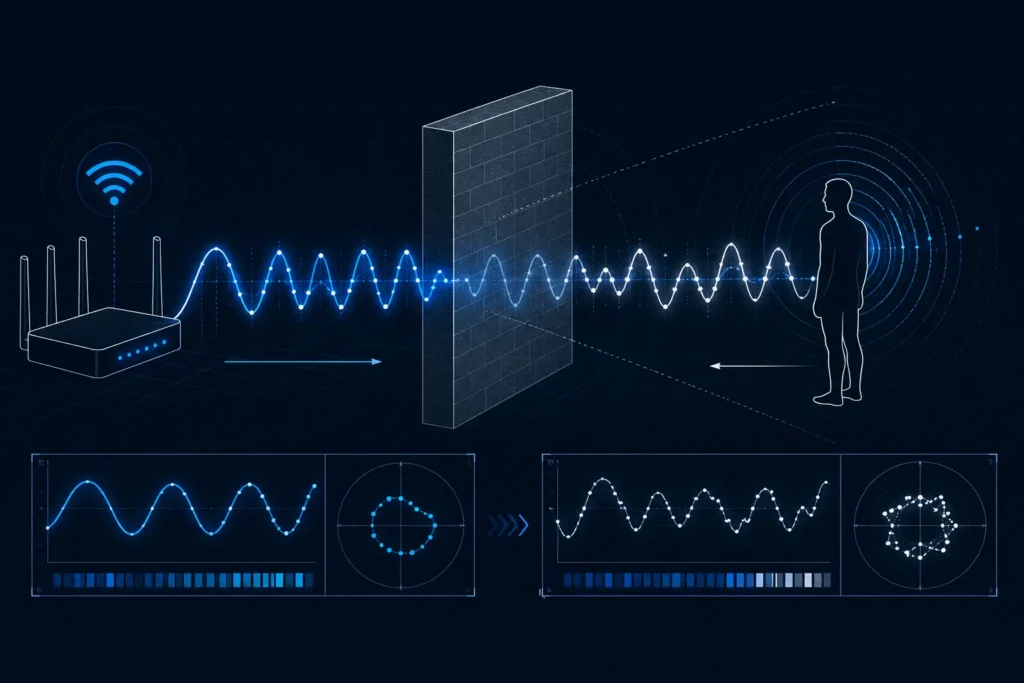
At its technical core, RuView taps into standard IEEE 802.11 WiFi transmissions. As radio signals bounce off interior walls, furniture, and human bodies, their phase and amplitude shift in small, predictable ways. RuView captures these high-resolution Channel State Information (CSI) subcarrier packets at microsecond intervals.
This raw radio signal stream is continuously fed into lightweight Rust signal engines and neural networks. These models filter out environmental RF noise, isolate the Doppler frequency shifts caused by human motion, and output real-time presence, activity, and vital sign data across your local network.
Main Purpose
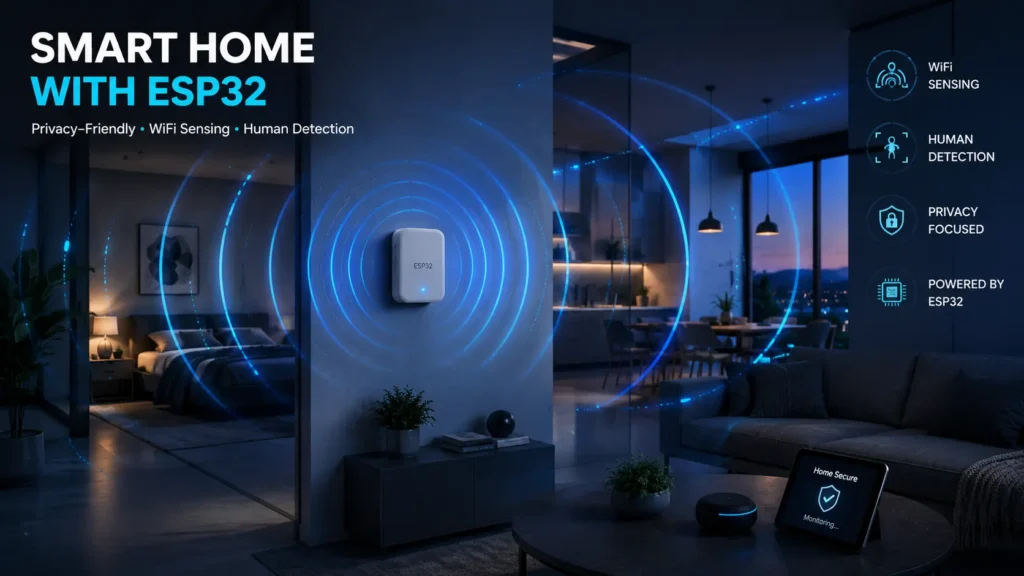
RuView’s core mission is to make high-precision spatial sensing accessible to everyone, without compromising human privacy. It lets homeowners, researchers, and developers build zero-camera monitoring solutions for residential security, eldercare fall detection, occupancy-aware climate control, and smart building automation.
Because all signal processing happens strictly on your local network or hardware gateway, no private telemetry or media is ever sent to remote cloud servers. You keep full data sovereignty while still getting industrial-grade sensing built on everyday hardware.
Who Created RuView?
RuView was designed, engineered, and open-sourced by a global community of radio frequency engineers, machine learning researchers, and privacy advocates. Powered by recent breakthroughs in ESP32 CSI firmware access and lightweight Rust signal processing, the team built RuView as an accessible alternative to proprietary enterprise radar systems.
Today, RuView remains fully open source under the permissive MIT license, encouraging global research collaboration, home automation integration, and custom commercial deployments without restrictive licensing barriers.
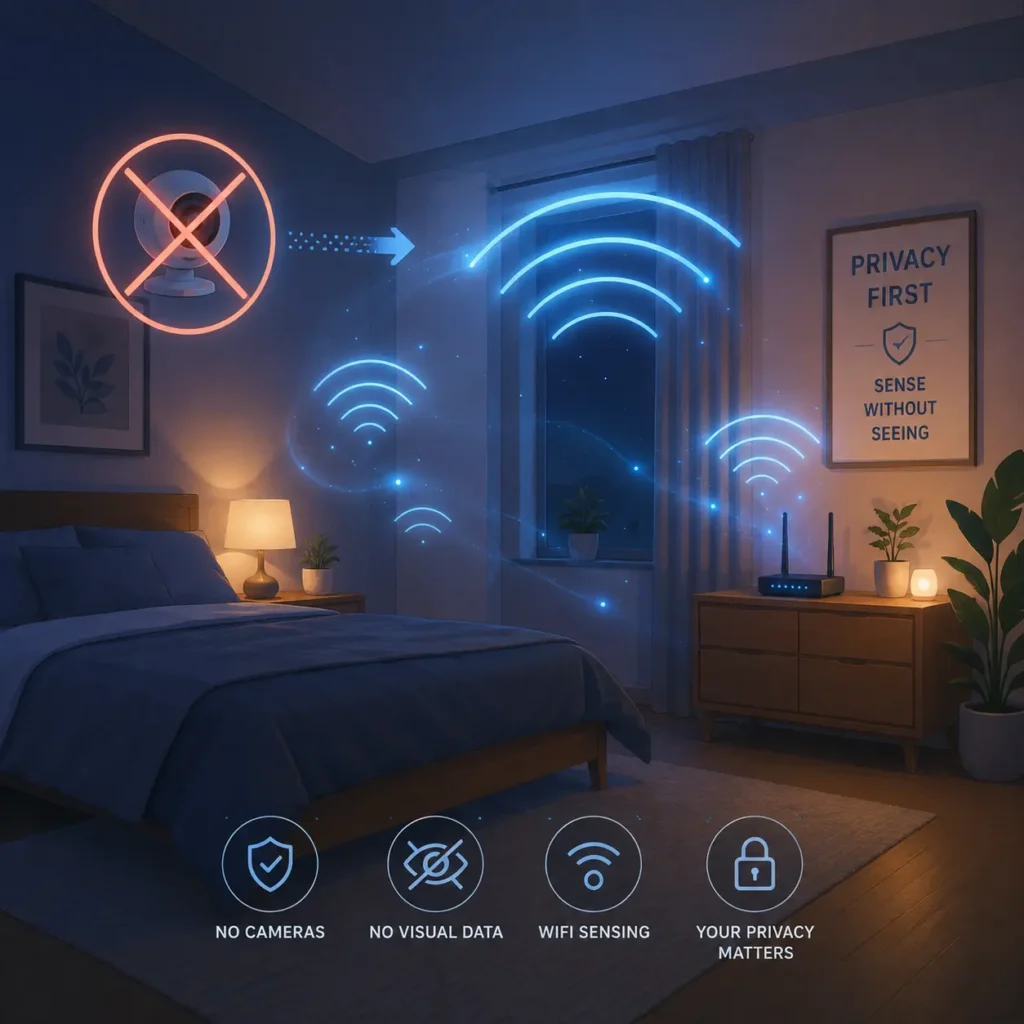
Key Features of RuView
AI WiFi Sensing
Uses 802.11 b/g/n/ax WiFi subcarriers to build real-time 3D spatial disturbance fields, with no active optical emitters required.
Continuously learns the room’s ambient baseline noise, so detection thresholds adjust automatically as the RF environment changes.
Human Presence Detection
Detects micro-movements, chest wall expansion during breathing, and subtle limb repositioning, even while a person is completely stationary.
Eliminates the “sleep false negative” problem common in legacy PIR sensors, so a room stays marked as occupied during sleep or focused work.
WiFi CSI Processing
Extracts up to 64 individual subcarriers per WiFi packet, reading both phase shift and amplitude attenuation.
Processes thousands of incoming CSI packet matrices every second through high-throughput Rust FFT and PCA pipelines.
Camera-Free & Privacy-Friendly
No photos, no video feeds, and no microphones. Complete privacy for bedrooms, bathrooms, and confidential spaces.
No cloud telemetry needed. All signal matrices stay strictly within your local encrypted network.
Through-Wall Motion Detection
2.4 GHz and 5 GHz radio frequencies pass through drywall, glass, wood doors, and interior partitions with ease.
A single node can cover adjacent rooms without needing hardware placed inside every one.
Multi-Node Mesh Deployment
Connect multiple ESP32 receiver nodes to a centralized gateway engine for multi-angle spatial triangulation.
Fuses CSI telemetry from multiple angles to build a detailed room occupancy heatmaps and direction-of-travel vectors.
How RuView Works: The Technical Pipeline
WiFi CSI Explained
When a WiFi router sends a data packet to your smartphone or ESP32 board, the signal doesn’t travel in a straight beam. Instead, it spreads out like water waves, bouncing off walls, ceilings, furniture, and human tissue before reaching the receiver antenna.
Channel State Information (CSI) is a matrix of complex numbers produced by the physical layer (PHY) of the receiver chip. It describes exactly how each individual subcarrier frequency in the WiFi channel was scattered, attenuated, and delayed during transit.
Signal Collection & CSI Processing
Custom open-source firmware flashed onto an ESP32 board intercepts these raw PHY subcarrier frames. The board streams the raw binary CSI payloads over high-speed UDP or USB serial to the RuView Rust gateway.
The Rust engine then applies low-pass Butterworth filtering, phase unwrapping, and Principal Component Analysis (PCA) to pull environmental disturbance features out of raw noise.
AI Inference & Motion Detection Pipeline
Denoised subcarrier feature vectors are passed into compact neural models (1D Convolutional / LSTM networks). These models evaluate time-series Doppler signatures to classify specific human activities such as walking, sitting, falling, or breathing.
Finally, the engine broadcasts structured JSON event payloads over WebSocket and MQTT, making it easy to trigger smart home automations in Home Assistant or custom security dashboards.
Frequently Asked Questions
Answers to common questions about RuView, WiFi CSI sensing, and privacy-first radar setups.
What is RuView?
RuView is an open-source, edge-native AI WiFi sensing platform that turns commercial microcontrollers like the ESP32 into long-range spatial radar arrays, capable of detecting human presence, motion, and breathing without cameras.
Is RuView completely free to use?
Yes. RuView is released under the permissive MIT license, so it’s free to use, modify, and deploy for personal, research, or commercial projects.
Does RuView require optical cameras?
No. RuView works entirely through WiFi radio signals. No cameras, lenses, or microphones are involved at any point in the sensing process.
Can RuView detect human breathing?
Yes. RuView can pick up chest wall expansion and subtle body movement caused by breathing, even when a person is completely still, such as during sleep.
Which ESP32 board is best for RuView?
Any ESP32 board with CSI-capable firmware support works. Boards with external antennas generally give more stable and longer-range readings.
Does RuView work through solid walls?
Yes. Since it uses 2.4 GHz and 5 GHz radio frequencies, RuView can detect motion through drywall, wood doors, glass, and interior partitions.
Is RuView accurate for room occupancy?
Yes. RuView continuously learns the room’s baseline RF noise, which helps it maintain accurate occupancy detection even when a person is sitting still or sleeping.
Can I use RuView for commercial projects?
Yes. The MIT license allows unrestricted commercial use, including integration into paid products or services.
Does RuView require cloud servers?
No. All processing happens locally on your network or hardware gateway. No data is sent to external cloud servers.
How many ESP32 nodes do I need?
A single node can cover one to two adjacent rooms. For larger spaces or more precise triangulation, multiple nodes can be connected in a mesh setup.
Does RuView work with 5GHz WiFi?
Yes. RuView supports both 2.4 GHz and 5 GHz WiFi bands.
How does RuView compare to PIR sensors?
Unlike PIR sensors, which fail to detect stationary people, RuView can sense breathing and micro-movements, making it far more reliable for occupancy and eldercare use cases.
Can pets trigger false motion alarms?
RuView’s models are tuned to distinguish human-scale motion patterns, which reduces false triggers from smaller pets, though sensitivity can be adjusted based on your setup.
How do I connect RuView to Home Assistant?
RuView broadcasts structured JSON event data over MQTT and WebSocket, which can be integrated directly into Home Assistant using standard MQTT automations.
What programming languages are used in RuView?
The core signal processing engine is built in Rust, with firmware written in C/C++ for the ESP32, and AI models built using lightweight neural network frameworks.
Are there video tutorials available?
Yes, video walkthroughs covering setup, calibration, and integration are available alongside the written documentation.
Where can I find the official setup guide?
The full setup guide, including firmware flashing steps and gateway configuration, is available in RuView’s official documentation and GitHub repository.
Is RuView safe from hacking?
Since all data stays on your local encrypted network with no cloud dependency, RuView’s attack surface is significantly smaller than cloud-connected camera systems.
What is Channel State Information (CSI)?
CSI is a matrix of complex numbers produced by a WiFi chip’s physical layer, describing how each subcarrier frequency was scattered, delayed, and attenuated as it traveled through the environment.
How do I flash my ESP32 board?
You flash RuView’s custom open-source firmware onto the ESP32 using standard tools like esptool or PlatformIO, following the step-by-step instructions in the official setup guide.